
[project]
Flight Crew
.svg)

[Overview]
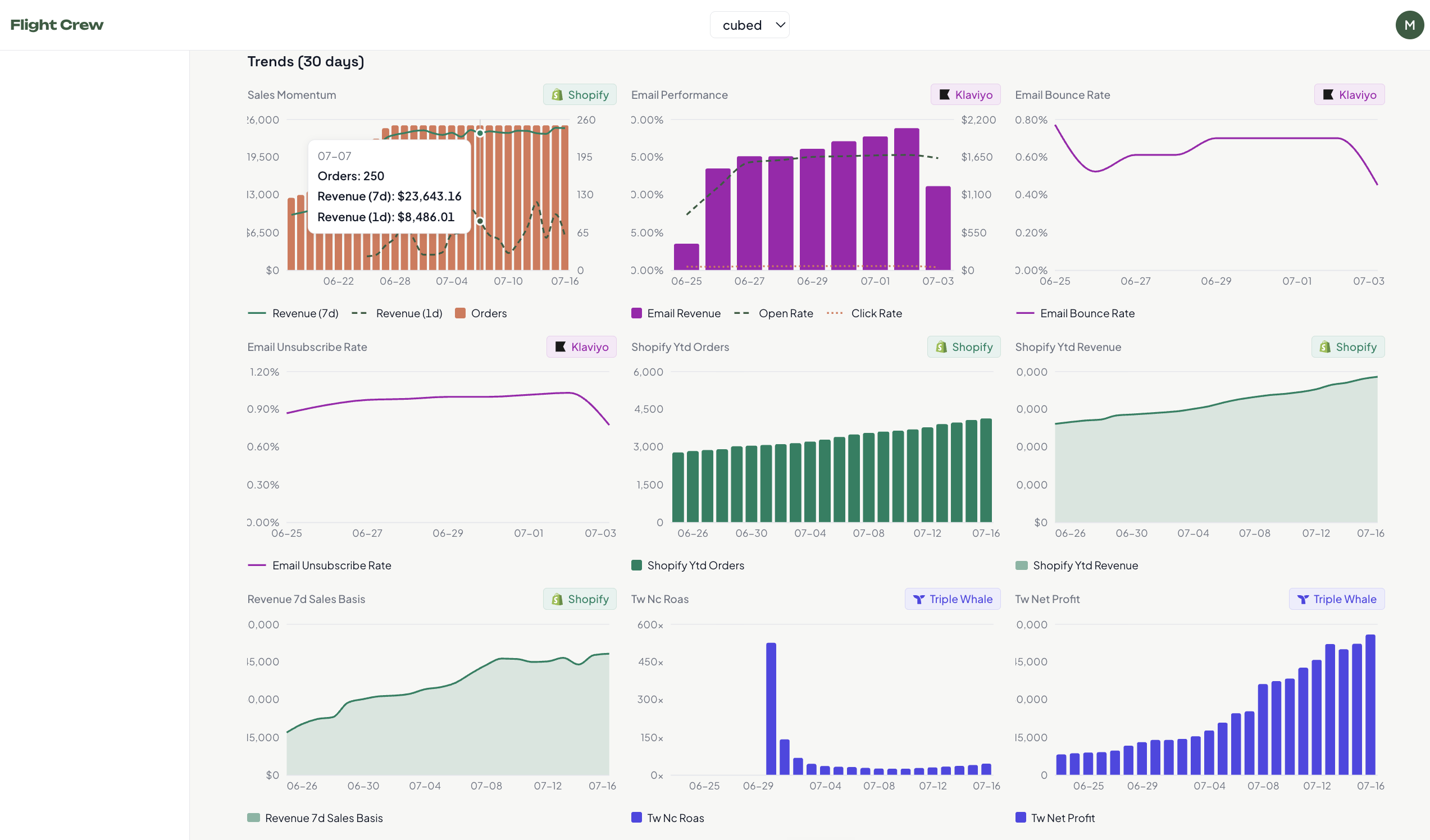
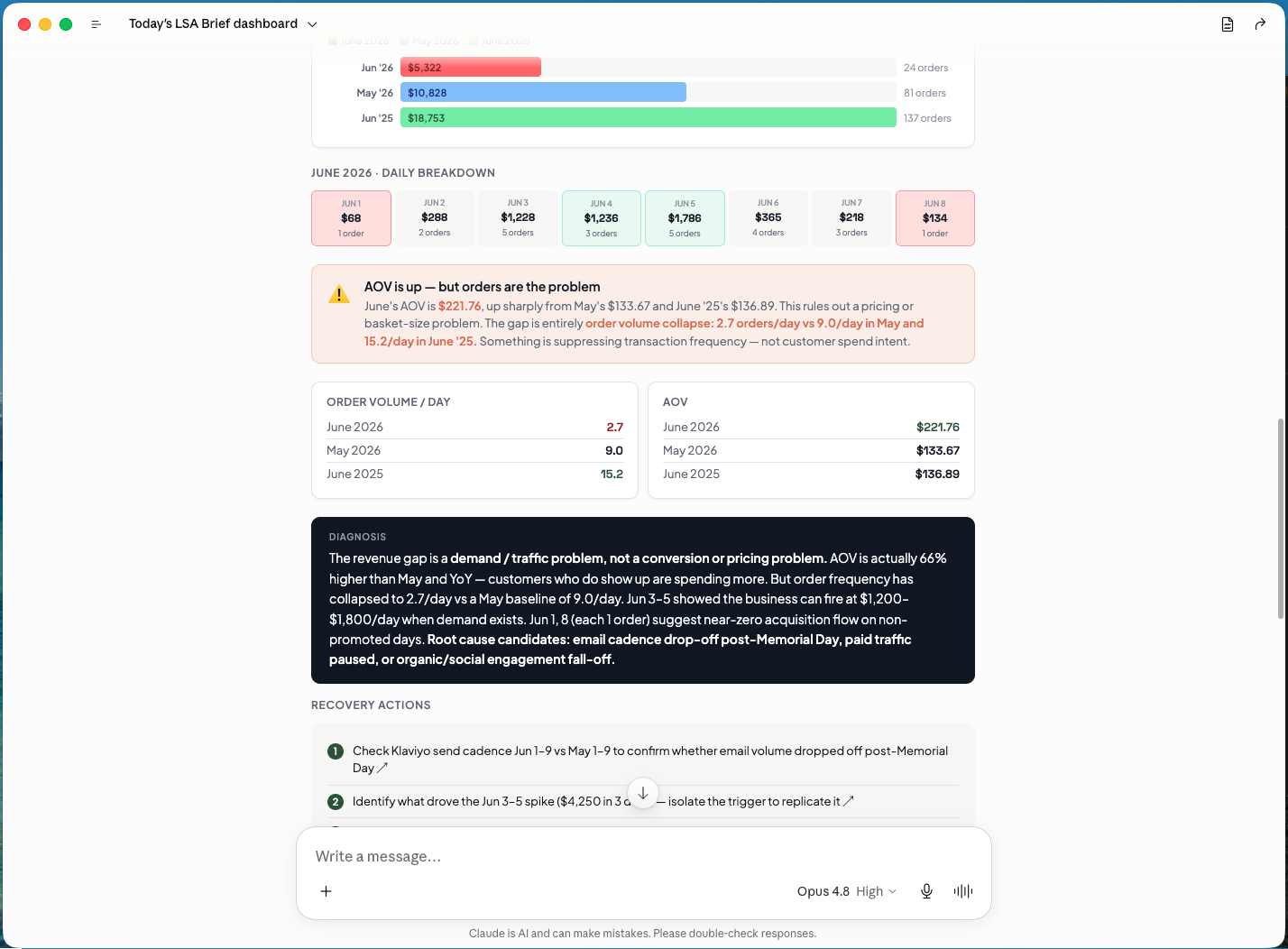
Flight Crew is an AI operating layer for Shopify DTC brands. Its core product, Flight Deck, provides operators with strategic guidance, automated Skills that execute operational work, and actionable analysis prompts generated from each customer's proprietary datasets. The system runs nightly against a brand's Shopify store, email platform, ad accounts, and operational data, and delivers prioritized, evidence-backed direction the operator acts on directly through Claude.
The technology
- Multi-tenant TypeScript/Node.js platform, PostgreSQL persistence, Next.js command center
- MCP (Model Context Protocol) server as the primary interface: platform capabilities are exposed as tools inside Claude rather than a standalone dashboard
- Nightly OODA pipeline (Observe, Orient, Decide, Act) collects per-client signals across orders, email, ad attribution, inventory, and operational spreadsheets, then produces ranked priorities with evidence attached
- Enforced data-integrity rule: null over wrong data. Signals that cannot be computed write null, never placeholder values
- Skill system packages operational capabilities as versioned Skills with declared scripts, render presenters, and per-operator authorization tiers, executed on schedules or on demand
- Registration-time invariant: no Skill reaches active status without every component required to produce customer-visible output
- Per-client context system: connector context packs, structured operator interviews for new data sources, and AI-proposed context changes gated behind human-approved pull requests
The agentic development process
- Three-party development team, two of which are AI, under strict division of authority
- Human: product decisions, all merges to production, all production infrastructure access
- AI architect/reviewer: drafts implementation plans, manages the ticket board, reviews every pull request with inline comments
- AI implementer: writes all code, with repository write access under hard budget and turn caps per run
- Autonomous loop: a CI dispatcher claims eligible tickets from the backlog, hands them to the implementing agent, which branches, implements, and opens a pull request without human involvement
- Ticket grounding standard: every symbol referenced in a ticket must resolve to a real source file at a specific commit before pickup. Controlled cohort comparisons showed specification quality, not model capability, was the binding constraint on autonomous throughput
- Structural separation of duties: the reviewing agent can comment but is technically prevented from approving; review workflows run on triggers that pull request content cannot tamper with
- Verification discipline: agent claims are checked against source, not summaries. Agents that hit a policy boundary surface it and stop
.svg)

No items found.

.svg)


Let's talk
Feel free to reach out if you'd like to discuss a project, collaboration, or just want to connect.
.png)